
Skip to content

Thermal sterilization of multichamber bags

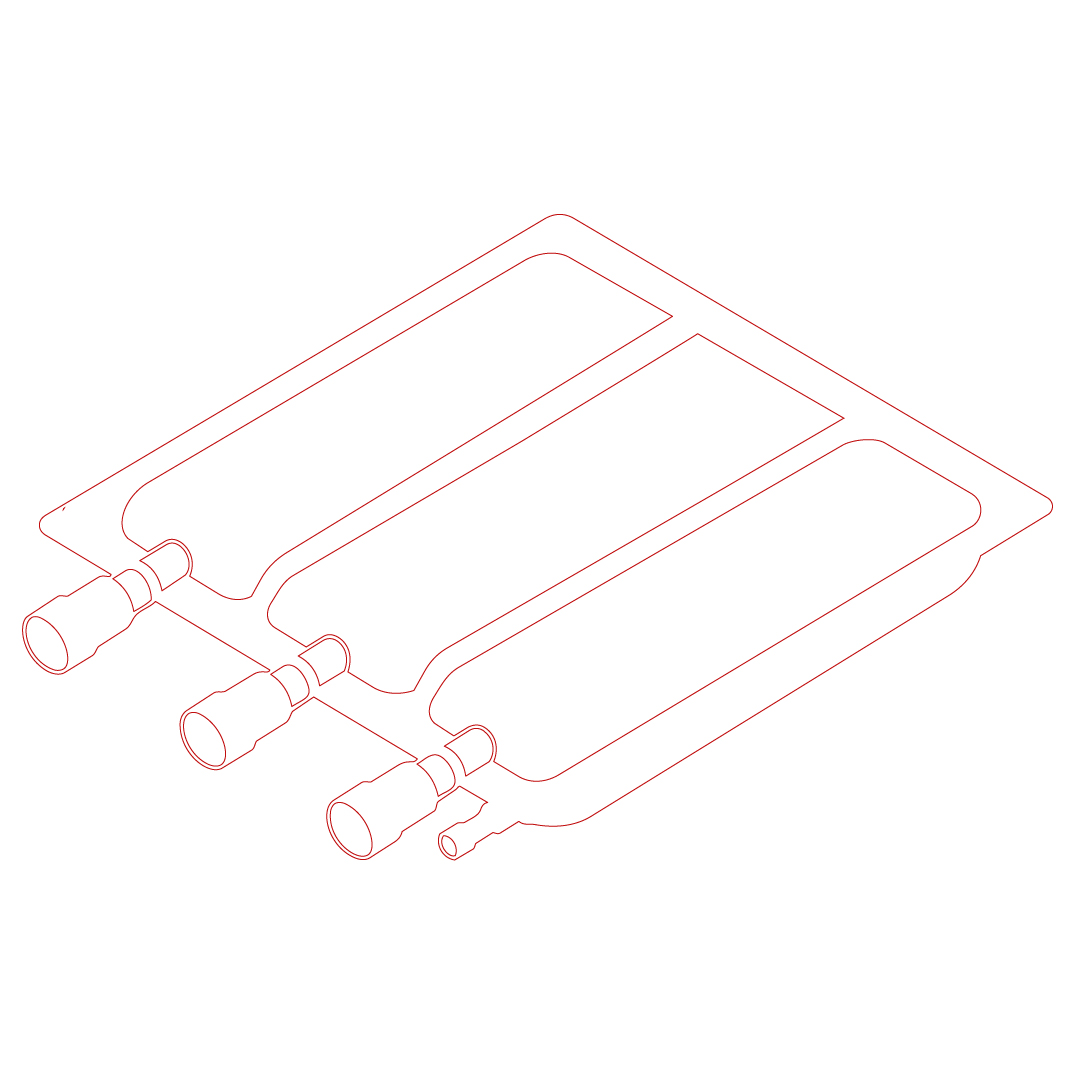
A multichamber bag enters the sterilization process as a single container, but its chambers do not behave as a single product.

Different fill volumes, headspaces and geometries create different thermal inertias within the same packaging. The smallest chambers can rapidly follow the process temperature and begin accumulating lethality, while the largest chamber is still heating. Extending exposure until the slowest chamber reaches the target may therefore subject the faster chambers and their contents to unnecessary thermal stress.

The process must reconcile these different responses while preserving bag integrity and controlling leakage, deformation, stickiness, blushing and contact marks.
Sterilizing a multichamber bag means achieving one validated outcome across chambers that never heat in the same way.


Request more information

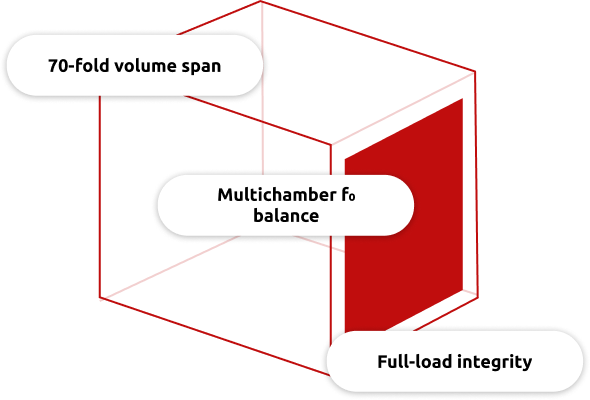
WE CONTROL MORE THAN A 70-FOLD VOLUME DIFFERENCE WITHIN THE SAME BAG.

Our experience includes five-chamber bags with fill volumes ranging from 15 to 1,067 mL: more than a 70-fold difference between chambers processed simultaneously within the same packaging.

We develop the cycle from the actual temperature and F₀ accumulated inside the different compartments, not simply from the sterilization-environment setpoint. By governing the heating profile, we bring the largest chamber into the required temperature range while limiting unnecessary thermal exposure in the smaller, faster-heating chambers.

This knowledge allows us to process complex multichamber configurations at full-load scale, achieving the required lethality across chambers and load positions while maintaining bag integrity.

We control more than a 70-fold volume difference within the same bag. 

Diagram of key factors for multichamber bag sterilization: 70-fold volume span control, multichamber F0 balance, and full-load integrity
multichamber-bags-fedegari-solution-packging

OUR APPROACH

The sterilization-environment temperature cannot reveal what is happening inside chambers with radically different volumes. We position temperature sensors in the smallest and largest compartments and across representative load locations, making the thermal delay between them observable throughout heating, exposure and cooling.

SHAPING HEATING BEFORE ADDING EXPOSURE

When the largest chamber lags behind, simply extending the exposure phase increases the thermal burden on every other chamber. We instead use a modulated heating profile to progressively reduce the temperature difference before exposure begins. This produces a more consistent accumulation of F₀ across the complete multichamber system.

PROVING THE RESULT AT FULL-LOAD SCALE

Chamber-to-chamber control must remain valid when bags are stacked across the complete load and heat-transfer conditions change with position. Our experience includes configurations of 65 five-chamber bags distributed across 13 load levels, with temperature monitoring inside both the smallest and largest compartments at multiple locations.

This approach achieved the required F₀ throughout the load within the defined cycle duration, with no leakage and no measurable weight loss in the final confirmation cycle.

DISTINGUISHING PROCESS PERFORMANCE FROM PACKAGING BEHAVIOUR

Bag integrity, sterilization effectiveness and cosmetic appearance are separate outcomes. We evaluate each one independently and challenge the variables that may influence it.

Our experience has shown that changing sterilization temperature or headspace does not necessarily resolve effects such as stickiness. Recognizing when an attribute is not responsive to cycle adjustments prevents ineffective process changes and redirects the investigation towards material properties, bag geometry or product-packaging interactions.

FREQUENTLY ASKED QUESTIONS

Why is chamber temperature insufficient for process development?

The process environment may already be within the sterilization temperature band while the product inside the largest chamber is still below it. Only direct measurement within the different compartments reveals their actual temperature and accumulated lethality.

How is performance demonstrated across a full load?

Sensors are positioned inside the smallest and largest chambers of bags located at representative levels and positions. Temperature and F₀ distribution are then assessed together with cycle duration, leakage, weight loss and the relevant packaging-quality attributes.

Can cycle optimization eliminate every cosmetic effect?

No. Some effects respond to temperature, pressure or heating and cooling rates; others originate from the packaging material, headspace, surface contact or product-packaging interaction. A knowledgeable process-development approach determines which variables genuinely influence the observed effect before changing the cycle.

How can the largest chamber reach the target without overprocessing the smallest?

The key is not simply to extend exposure. A modulated heating phase allows the larger chamber to progressively approach the required temperature while controlling the F₀ already accumulating in the smaller chambers. Exposure can then begin from a more balanced thermal condition.

Why is the volume difference between chambers so critical?

Fill volume directly affects thermal inertia. A 15 mL chamber can follow the process temperature rapidly, while a chamber containing more than one litre requires considerably longer to heat. The cycle must compensate for this difference without unnecessarily increasing the thermal exposure of the smaller chambers.

Is the largest chamber always the process worst case?

It is normally the primary candidate for the slowest-heating location, but it cannot be assumed automatically. Headspace, geometry, bag orientation, supporting surfaces and position within the load can also influence heat transfer. The actual worst case must be identified through product-temperature mapping.

fedegari-solutions-sterilization-for-application-tecnology-packaging-1

THE CUBE HAS MORE THAN THREE FACES

Explore how Fedegari has approached sterile process challenges across different industries, applications and manufacturing environments.


WHITE PAPER AND RESEARCH

Technical depth, documented and made accessible. A growing collection of papers and research contributions developed from real application experience across industries, processes and manufacturing environment.

Customer so closer is not a promise of proximity
It is a way of working.

A global network designed to keep Fedegari close to the customer, close to the process and close to the decisions that make sterile manufacturing safer, more reliable and more valuable over time.