
Skip to content

Configurable
high-temperature sterilization

In pharmaceutical R&D and Quality Control, sterilization requirements evolve with formulations, containers, materials and test methods. The same laboratory may need to process culture media, porous solids, open liquids and closed or deformable containers: each responding differently to heat, pressure, steam and cooling.

A generic cycle can compromise sterility, damage samples or containers and undermine the reliability of development and QC results. Laboratories need the flexibility to explore different applications without losing process control and to generate knowledge that remains relevant as the product moves towards pharmaceutical manufacturing.


Request more information

MOST LABORATORY STERILIZERS ALLOW USERS TO CONFIGURE PROGRAMS.

We allow laboratories to configure the process

Our high-temperature sterilization technology brings the Phase Group architecture and process knowledge developed for industrial pharmaceutical manufacturing into R&D and Quality Control.

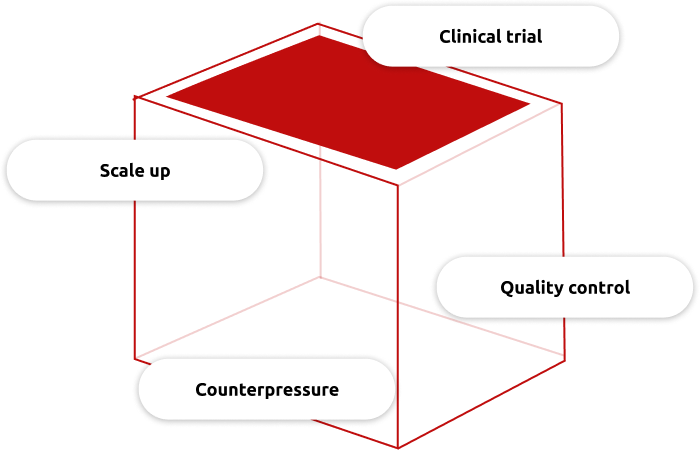
Air removal, steam penetration, counterpressure, cooling and drying can be configured around the behaviour of each load, protecting sterilization performance, sample integrity and process repeatability across different applications. This creates a consistent process foundation from laboratory development to industrial implementation.

The scale changes. The process logic remains.

Key advantages of Fedegari configurable laboratory autoclaves for R&D and QC applications
Elemento grafico rotondo

ONE PLATFORM WITH DIFFERENT THERMAL PROCESSES

Air removal, steam penetration, counterpressure, cooling and drying are configured around solids, porous materials, open liquids and closed or deformable containers.

Elemento grafico rotondo

FROM LABORATORY DEVELOPMENT TO MANUFACTURING

Industrial Phase Group architecture creates continuity in process logic as applications evolve from R&D towards pharmaceutical production.

Elemento grafico rotondo

STERILITY WITHOUT COMPROMISING THE LOAD

F₀-based control, active cooling and counterpressure deliver the required thermal treatment while protecting sensitive samples, formulations and containers.

Elemento grafico rotondo

PHARMACEUTICAL-GRADE PROCESS EVIDENCE

Integrated testing, traceable cycle data and qualification support provide the evidence required for reliable QC, development and regulated laboratory activities.

DEDICATED PROCESS CONTROL FUNCTIONS

Coordinated Phase Groups configure air removal, steam penetration, thermal exposure, pressure, cooling and drying around the behaviour of each load.

Deep or slow vacuum adapts air removal to porous or sensitive materials. Real-time F₀ calculation governs thermal exposure, while counterpressure and active cooling protect liquids and closed or deformable containers. Dedicated functions support processing up to 137°C, enhanced drying, in-place air-filter sterilization, cycle repetition and temperature maintenance.

Proven by numbers

PROVEN BY NUMBERS

147–729 L
useful chamber capacity range

<70 mbar
deep vacuum for air removal, steam penetration and drying

10
year life cycle guarantee on pressure vessel

Up to 137°C
high-temperature processing with the dedicated counterpressure configuration

WHEN SHOULD YOU CHOOSE OUR TECHNOLOGY

PROCESS DEVELOPMENT AND QUALITY CONTROL

For thermal-cycle development, repeated stress testing, culture-media preparation and pharmacopoeial testing of glass resistance, alkalinity and stopper integrity. 

POROUS AND NON-POROUS SOLIDS

For glassware, laboratory instruments, machine parts, hollow components, filters, textiles and wrapped materials requiring effective air removal, steam penetration and final drying.

OPEN LIQUIDS

For culture media and laboratory solutions in open or loosely capped containers.

Controlled cooling and final counterpressure prevent boil-over and protect sample integrity.

CLOSED AND DEFORMABLE CONTAINERS

For sealed containers, bags and pre-filled syringes requiring pressure control throughout heating, sterilization and cooling.

FREQUENTLY ASKED QUESTIONS

Can a laboratory cycle be transferred directly to industrial production?

Not directly. Chamber geometry, load size and heat-transfer conditions change with scale. However, the Phase Group architecture originates from industrial applications—including filling-line integration and large-scale pre-filled syringe sterilization.

This creates continuity in process logic and makes laboratory knowledge more relevant when developing and validating the industrial process.

What does “configuring the process” mean?

It means going beyond adjustable temperature and time settings. We configure air removal, steam penetration, counterpressure, cooling and drying around the behaviour of the load using dedicated Phase Groups and process hardware.

How are validation and data integrity supported?

The technology can be configured with audit trails, electronic signatures, controlled user access, independent recording and automated backups. Vacuum, pressure, Bowie-Dick and air-detector tests are supported, together with FAT, SAT, IQ/OQ, PQ, calibration and temperature mapping.


Can the same technology sterilize both solids and liquids?

Yes. Different process configurations support porous and non-porous solids, open liquids and closed or deformable containers. Each load family uses a dedicated strategy to achieve sterilization while protecting the load.


Image Box - Camera

Scritta legata al
mondo della case
studies e molto

altro

Description Box - Camera
CASE STUDIES

Lorem ipsum dolor sit amet consectetur. Varius nulla nulla risus ullamcorper urna ut nulla tristique.

Discover more

Customer so closer is not a promise of proximity.
It is a way of working.

A global network designed to keep Fedegari close to the customer, close to the process and close to the decisions that make sterile manufacturing safer, more reliable and more valuable over time.