
Automated
handling
In high-capacity terminal sterilization lines, production continuity depends on much more than sterilizer performance. Products must be accumulated, configured, loaded, processed, unloaded and transferred downstream without interrupting the production flow.
When handling and sterilization are engineered separately, every interface can generate delays, product damage, inconsistent load configurations and unclear responsibilities.
The performance of the line depends on governing product flow and sterilization as one coordinated process.
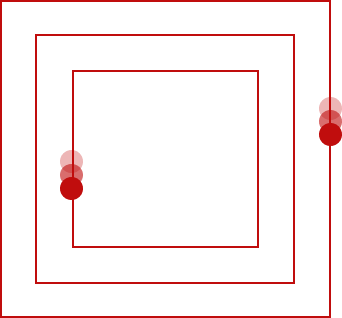
MOST HANDLING SYSTEMS MOVE PRODUCTS BETWEEN MACHINES
We integrate handling directly with the sterilization process.
Product accumulation, load formation, transfer, cycle execution, unloading and downstream movement are engineered within one coordinated control architecture. Once the predefined criteria are met, the sterilization cycle is automatically initiated.
One process.
One control architecture.
One accountable partner.
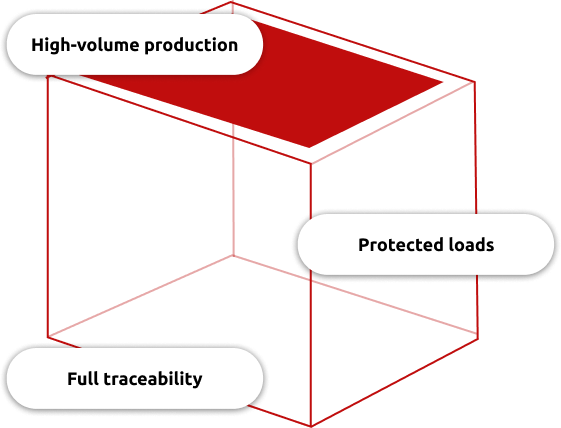

ONE COORDINATED PRODUCTION FLOW
Accumulation, loading, cycle execution, unloading and downstream transfer operate as one synchronized flow, supporting continuous high-capacity production.
REPEATABLE LOADS + PROTECTED PRODUCTS
By reproducing the required load configuration and positioning every product consistently, automated handling supports repeatable product exposure and sterilization performance across every cycle, while protecting containers and devices during transfer.
ONE PARTNER ACROSS EVERY INTERFACE
We take full responsibility for mechanical integration, automation, safety logic, process synchronization, testing and qualification support across the complete system.
DEDICATED PROCESS CONTROL FUNCTIONS
The coordinated control architecture governs product accumulation, load formation, transfer permissions, sterilizer readiness, automatic cycle initiation and unloading as one synchronized process.
Predefined logic authorizes each operation only when the required conditions are met, maintaining the association between load identity and cycle execution throughout the production flow.
IV BAGS
Flexible containers require controlled accumulation, positioning and transfer to prevent deformation and reproduce the required load pattern. Automated handling protects the bags while supporting consistent product exposure across every cycle.
VIALS AND BOTTLES
High-speed handling must maintain line continuity while minimizing glass-to-glass contact, breakage and positioning variability. Controlled load formation ensures that containers enter the sterilizer in a repeatable configuration.
PREFILLED SYRINGES
Prefilled syringes combine fragile components with strict requirements for orientation and package integrity. Gentle, controlled handling protects the syringe system throughout loading, sterilization and downstream transfer.
MEDICAL DEVICES
Different geometries, materials and packaging configurations require application-specific handling and load formation. Consistent positioning protects product and packaging integrity while supporting repeatable sterilization performance.
OTHER TERMINALLY STERILIZED PRODUCTS
The handling architecture can be developed around additional product formats, load patterns and production requirements where automated transfer and sterilization must operate as one coordinated flow.
How does automated handling support sterilization repeatability?
The system reproduces the required load configuration and positions products consistently in every cycle. This supports repeatable product exposure and sterilization performance across successive batches.
Why should handling and sterilization be engineered together?
Because load formation, product positioning, transfer timing and sterilizer availability directly influence line continuity and the repeatability of the sterilization operation. Engineering them together removes unmanaged interfaces between product flow and process execution.
Can the system accommodate different products and load configurations?
Yes. The handling architecture is engineered around the product characteristics, production capacity, required load pattern and sterilization process of the specific application.
How is traceability maintained across the line?
The TH platform connects product handling, load identity, cycle execution and production data, enabling batch-to-cycle traceability and integration with the plant MES.